Increased range of motion– actual squat depth is determined by several factors, including knee health and flexibility. However, most lifters can usually front squat deeper than they can back squat. A deeper squat increases quadriceps engagement (1), making front squats better for quads hypertrophy. Front squats are also good for improving flexibility and mobility.
A stronger upper back – with the barbell held on the front of your shoulders, your upper back is going to have to work especially hard to keep your torso upright. It’s no coincidence that many Olympic lifters, who do more front squats than back squats, often have such muscular upper backs.
Less stress on your spine – compared to back squats, front squats are done with a much more upright torso. The further forward you lean, the more pressure there is on your spine. Put a weight on your back, and that stress quickly increases. By allowing a more upright position, front squats put much less strain on your spine than back squats. There is still a compressive force but less shearing force, and it’s the latter that is most likely to cause back injuries
With front squats, you can dump the bar forward and off your shoulders if you can’t complete a rep. While this SHOULD only be done in emergencies, it’s nice to know you have an escape strategy if you fail during a set of front squats.
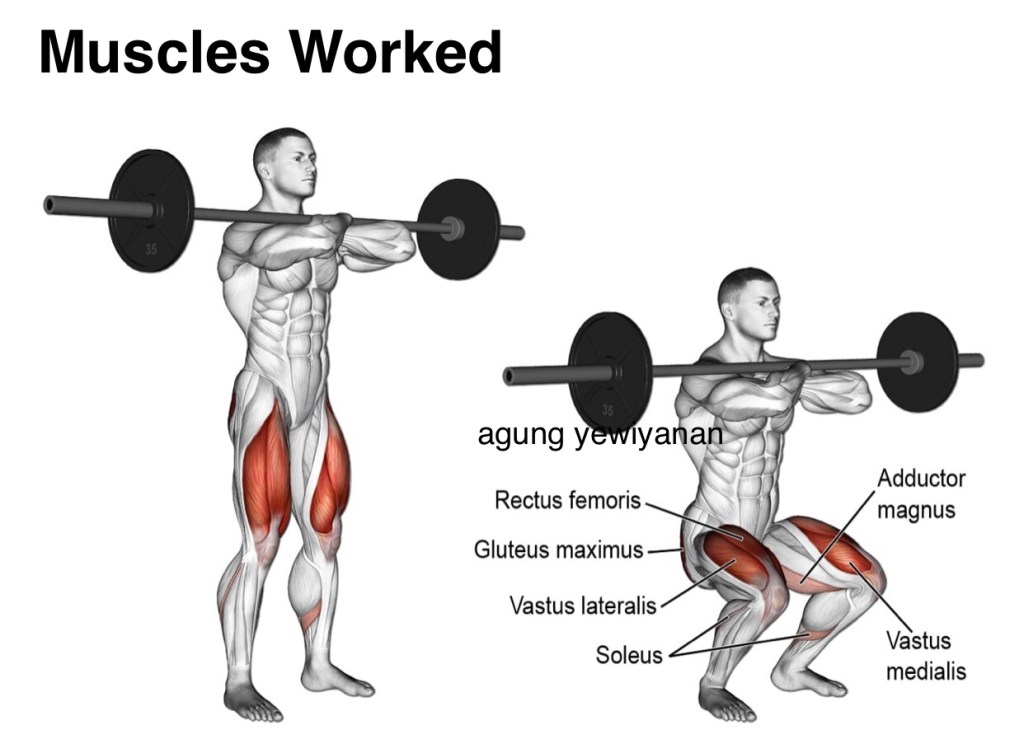
It’s easier to dump the bar if you fail – back squats should always be done in a power rack. That way, if you get stuck at the bottom of a rep, you won’t get stapled to the floor by a heavy weight. Needless to say, getting stuck under a heavy weight at the bottom of a squat could cause serious injury.
Less knee joint stress – studies have revealed that front squats are easier on your knee joints than back squats, despite the increased range of motion (2). That’s great news if you suffer from knee pain .
Less shoulder stress – while front squats require good upper body mobility to do them properly, they aren’t as hard on your shoulder joints as back squats can be, especially the low bar variety. Front squats are a good exercise choice for lifters with banged-up shoulders.
Less potential for cheating – when doing back squats, your technique can deteriorate significantly, and you’ll still be able to keep cranking out the reps. Even if you lean forward too far, the bar will remain in place.
With front squats, if you fail to maintain that all-important upright posture or start to lower your elbows, you’ll probably drop the bar. It’s much harder to do front squats with improper technique. Good technique makes any exercise safer AND more effective.
 Health and nutrition care